Binance Files for Brazilian Crypto License Before October 30 Deadline — 22 Assets Delisted and Lending Suspended as Compliance Costs Become Clear
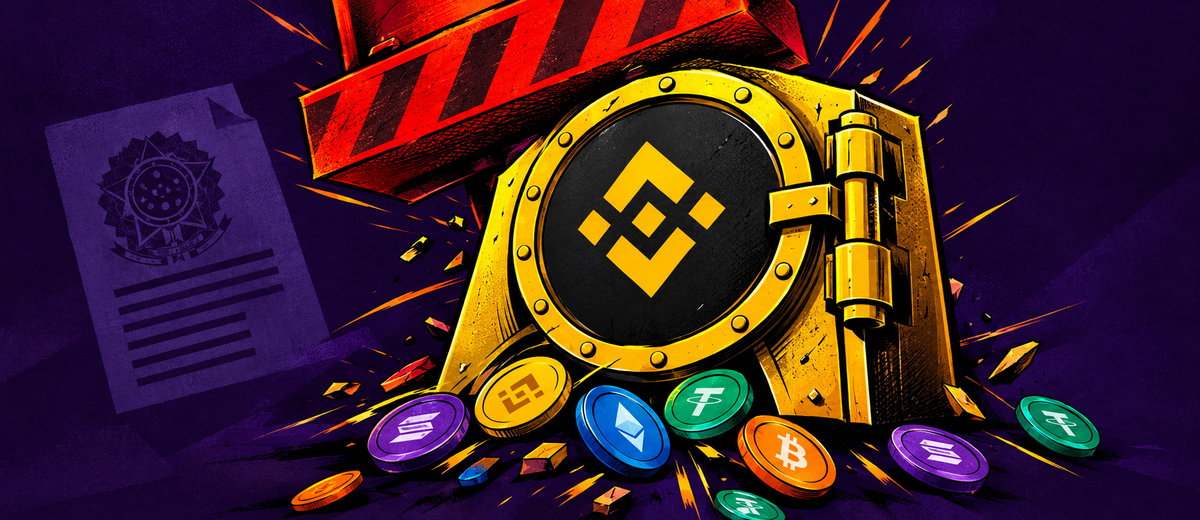
Binance has submitted a virtual asset service provider licence application to the Central Bank of Brazil through its local entity BBrasil, ahead of the October 30, 2026 deadline that determines whether existing crypto service providers can continue operating in the country under transitional arrangements. The application, filed on October 23, arrives alongside a set of service changes that took effect October 27 — including the suspension of crypto lending and margin trading, the delisting of 22 crypto assets from the Brazilian platform, and restrictions on other unnamed services. The filing preserves Binance's ability to keep running core operations for Brazilian users, but it does not constitute approval: the Central Bank's review process will ultimately determine whether Binance and its local entity receive the authorisation needed to operate permanently under Brazil's regulatory framework.
Key Facts
Binance submitted its crypto service provider licence application to the Central Bank of Brazil (Banco Central do Brasil) on October 23, 2026, through its Brazilian legal entity BBrasil
Brazil's October 30, 2026 deadline requires all existing crypto service providers to file authorisation applications to remain under transitional operating arrangements while reviews proceed
Service restrictions effective October 27, 2026: crypto lending and margin trading have been suspended for Brazilian users, alongside other unnamed service changes
22 crypto assets have been delisted from Binance's Brazilian offering
Core services preserved: trading of crypto assets, stablecoin trading, payments, and investment services remain available to Brazilian users
The application does not constitute regulatory approval — Binance is operating under transitional arrangements pending Central Bank review
Thiago Sarandy, Binance's general manager in Brazil, said the company hopes ongoing dialogue with the Central Bank will allow it to restore products discontinued to meet current regulations
The October 30 Deadline: What It Requires and Why It Matters
Brazil's regulatory framework for virtual asset service providers was established by Law 14,478 of December 2022 — known domestically as the Marco Legal das Criptomoedas (the Crypto Legal Framework). The law designated the Central Bank of Brazil as the primary supervisory authority for crypto exchanges and other entities offering virtual asset services, bringing Brazil's crypto industry under central bank oversight rather than the securities regulator — a design choice that reflects a categorisation of cryptocurrencies primarily as payment and financial instruments rather than securities.
The Central Bank subsequently developed VASP licensing regulations, creating an authorisation framework that specifies what entities can do, what capital and compliance standards they must meet, and how they must handle customer assets. The October 30, 2026 deadline represents a critical transition point in this implementation: it is the last date on which existing operators — companies already providing crypto services in Brazil before the full licensing regime came into force — can submit applications and retain the right to operate under transitional arrangements while their applications are processed.
What the transitional arrangement provides: An exchange that files a complete application by October 30 can continue operating for Brazilian customers while the Central Bank conducts its review. The review process typically involves assessment of the applicant's corporate structure, financial condition, compliance systems, risk management, and suitability of senior management. During this period, the exchange is permitted to maintain services but is expected to comply with current regulatory requirements.
What missing the deadline means: An entity that fails to file by October 30 loses access to the transitional arrangement. It would need to cease operations pending a decision on a standard (non-transitional) licence application — a process with less regulatory certainty about timelines and with more disruption to Brazilian customers. For a major exchange like Binance with significant Brazilian user activity, missing the deadline would have been commercially and operationally unacceptable.
Binance's October 23 filing — seven days ahead of the deadline — provides a modest buffer and signals that the company had sufficient time to prepare a complete application rather than rushing a last-minute submission.
The Corporate Structure: What BBrasil Is and Why It Matters
The application was submitted through BBrasil — Binance's Brazilian legal entity. This detail matters for understanding the regulatory structure.
Major international crypto exchanges operating in Brazil have generally established local entities to handle locally required compliance functions, customer contracts, and regulatory filings. The use of a local entity (BBrasil) rather than submitting as a foreign company directly reflects how Brazil's licensing framework is structured: authorisation is typically granted to the locally incorporated entity that interfaces with Brazilian customers and holds the required regulatory approvals.
The BBrasil structure creates a defined point of accountability for the Central Bank of Brazil. It is the legal entity that will hold the licence, be subject to Brazilian regulatory examinations, and bear direct responsibility for compliance with Brazilian requirements. This separation between the global Binance operation and the Brazilian legal entity is standard practice for multi-jurisdictional financial businesses and provides the Central Bank with a clearly supervised counterpart within its own jurisdiction.
Service Changes: What Brazilian Users Can and Cannot Access
The most immediate practical consequence of Binance's compliance process is the service adjustment that took effect on October 27, 2026 — four days after the licence application was filed.
Services suspended:
Crypto lending: Products that allowed Brazilian users to earn yield by lending their crypto assets, or to borrow against crypto collateral. Crypto lending is a frequent target of regulatory restriction globally because it involves credit risk, leverage, and the potential loss of customer assets if borrower defaults occur at scale. Brazil's regulatory framework appears to require these products to meet specific conditions that Binance's current offering does not satisfy.
Margin trading: Leveraged trading products that allow users to borrow funds to increase their position size beyond their deposited collateral. Margin trading amplifies both gains and losses, creating consumer protection concerns that regulators across many jurisdictions — including Brazil — have addressed through licensing conditions, leverage limits, or outright restrictions for retail participants.
Other services: Binance's announcement references additional service restrictions not specifically named, suggesting that the scope of product adjustment extends beyond lending and margin trading to other areas where the current regulatory requirements create compliance gaps.
Services preserved:
Binance's application explicitly identifies the core services that the BBrasil licence is designed to maintain: trading of crypto assets, stablecoin trading, payments, and investment services. These represent the foundational exchange and transaction services that most Brazilian Binance users rely on for their primary crypto activity. Their preservation is the primary commercial purpose of the licence application — without them, Binance's Brazilian business would effectively cease.
The distinction between preserved and suspended services reflects a compliance architecture in which the licence application is calibrated to the minimum viable product the company needs to maintain its Brazilian market presence, while more complex or higher-risk services are discontinued until the regulatory environment is clarified.
The 22 Asset Delistings: What They Signal
Binance has removed 22 crypto assets from the Brazilian platform's tradeable universe. The specific assets that were delisted have not been named in the announcement, but the scope of 22 tokens provides meaningful context for understanding the compliance challenge.
Across multiple jurisdictions, the process of regulatory compliance for crypto exchanges has required careful assessment of whether individual listed assets meet the standards required by the applicable regulatory framework. Assets may be delisted for several reasons:
Classification risk: Certain tokens may be assessed as securities or investment contracts under Brazilian law, which would require different licences or disclosures than standard commodity-like crypto assets. Exchanges operating under a central bank VASP licence rather than a securities regulatory framework may choose to delist assets that might be classified as securities to avoid operating outside their licence scope.
AML/CFT risk profile: Assets with poor transparency, anonymous transaction features, or associations with sanctioned entities or illicit activity may not meet the compliance standards required of a licensed VASP. Privacy coins or tokens with limited audit trails present particular challenges under anti-money laundering frameworks.
Liquidity and market depth: Newly licensed or compliance-focused exchanges sometimes use regulatory transitions as an opportunity to rationalise their asset listing to tokens with sufficient liquidity, market data, and established issuance structures to meet disclosure or suitability requirements.
Operational compliance: Some assets may require specific custody arrangements, blockchain integrations, or technical monitoring that the locally compliant operation cannot support under current infrastructure.
The 22-asset reduction is likely a combination of these factors applied to assets that Binance Brazil's compliance team determined presented unacceptable regulatory risk relative to their commercial value to the platform.
Thiago Sarandy's Statement: Compliance Without Abandoning the Product Roadmap
Binance Brazil general manager Thiago Sarandy's comment on the regulatory filing captures the company's intended posture:
Sarandy expressed support for a regulated market that takes account of virtual assets' characteristics — a formulation that endorses regulation in principle while implicitly arguing that the regulatory design should accommodate the specific nature of digital assets rather than forcing them into frameworks designed for conventional financial instruments.
His expressed hope that ongoing dialogue with the Central Bank would allow the company to restore discontinued products is significant in two ways. First, it signals that Binance views the current service restrictions as temporary and negotiable rather than permanent concessions. Second, it reveals that the primary channel for recovering suspended products is the regulatory dialogue rather than unilateral product reinstatement — suggesting that Binance is engaging with the Central Bank's framework constructively rather than pursuing any path that might jeopardise the application.
This posture is consistent with Binance's broader compliance trajectory across major markets: engaging with regulatory processes, making required adjustments, and maintaining dialogue about the conditions under which full product suites can be offered within the regulatory framework. The alternative — attempting to operate services without adequate regulatory cover — has produced severe consequences for the company in other jurisdictions and is no longer part of the operating model.
Brazil's Crypto Market: Why This Filing Matters at Scale
Brazil is one of the largest and most active cryptocurrency markets in Latin America and among the top markets globally by adoption metrics. A substantial portion of Brazil's population has engaged with digital assets — driven partly by the country's history of currency volatility, which has historically made alternative stores of value and inflation hedges attractive to Brazilian households.
Binance's dominant position in Brazil's crypto trading volume makes its licence application and the service adjustments accompanying it consequential for the Brazilian crypto market overall. Decisions that affect what Binance offers in Brazil — which assets are tradeable, which services are available, and which compliance standards apply — affect a significant fraction of all Brazilian crypto market activity.
The October 30 deadline's effect is not limited to Binance. All existing crypto service providers operating in Brazil face the same requirement. The collective compliance decisions made by exchanges and other VASPs ahead of the deadline are shaping Brazil's licensed crypto market structure — determining which operators continue under transitional arrangements and which face potential operational disruption if they miss the deadline or are unable to file complete applications.
The Global Pattern: Binance's Regulatory Engagement Across Markets
Binance's Brazil filing is one element in a multi-jurisdictional compliance effort that has reshaped how the exchange operates globally over the past several years.
In late 2023, Binance and its founder Changpeng Zhao reached a settlement with the US Department of Justice, with the company pleading guilty to violations related to anti-money laundering compliance and agreeing to pay approximately $4.3 billion in penalties. The settlement included ongoing monitoring requirements and management changes that reflected a fundamental reorientation toward regulatory compliance as an operating priority.
Across Europe, Binance has been adjusting its operations to comply with the EU's MiCA (Markets in Crypto-Assets Regulation) framework, which came into full effect in late 2024. In the UK, regulatory engagement with the Financial Conduct Authority has required comparable adjustments. In each case, the pattern mirrors what is happening in Brazil: licence applications, service restrictions for non-compliant products, and negotiation with regulators about the conditions for full-service operations.
Brazil's licensing process fits this pattern. What distinguishes it is the Central Bank's role as the primary regulator — giving Brazil's crypto oversight a financial stability and monetary stability framing rather than purely a consumer protection or securities regulation framing. For Binance, operating under central bank oversight means that its compliance framework must address not just investor protection but also payment system stability and potential systemic risk considerations that central banks prioritise.
What Comes Next
Binance's October 23 application initiates a Central Bank review process whose timeline has not been specified in the announcement. Several developments will determine the outcome:
Completeness review: The Central Bank will first assess whether the BBrasil application is complete — meaning all required documentation, financial statements, compliance system descriptions, and senior management fit and proper information have been provided. Incomplete applications may require supplementation before full review begins.
Substantive review: The Central Bank will assess whether BBrasil meets the licensing standards — capital adequacy, AML/CFT compliance systems, risk management, technology infrastructure, and governance arrangements. Given Binance's scale and global profile, the review is likely to be thorough.
Ongoing dialogue: Sarandy's reference to "ongoing dialogue with the Central Bank" suggests that Binance is not treating the application as a one-way document submission but as the beginning of a regulatory relationship. Engagement during the review process — providing supplemental information, clarifying product designs, and discussing how specific services might be structured to comply — is normal in major licensing processes.
Service restoration: The products suspended on October 27 — crypto lending, margin trading, and other services — remain unavailable to Brazilian users until either the licence is granted with terms that permit them, or a specific accommodation is agreed with the Central Bank. There is no guarantee that suspended products can be restored, and Sarandy's "hoped" framing reflects appropriate uncertainty about the outcome.
The 22 delisted assets: These may or may not be relisted following the licence review, depending on whether the compliance concerns that drove their removal can be resolved. The review process may include specific asset listing criteria that BBrasil must satisfy for each tradeable asset.
Summary
Binance's October 23 application to the Central Bank of Brazil for a virtual asset service provider licence — filed through its local entity BBrasil seven days before the October 30 transitional arrangement deadline — marks a formal step in the exchange's compliance process under Brazil's Marco Legal das Criptomoedas. The application preserves Binance's core Brazilian operations (crypto trading, stablecoin trading, payments, and investment services) under transitional arrangements while the Central Bank conducts its review. The compliance cost is visible in the October 27 service changes: crypto lending and margin trading suspended, 22 assets delisted, and other services restricted. Binance Brazil's general manager Thiago Sarandy has expressed the company's constructive engagement with the regulatory process and its hope that dialogue with the Central Bank will allow suspended products to return — though no timeline or guarantee accompanies that hope. The filing reflects the global pattern of Binance adapting its product offering to local regulatory requirements jurisdiction by jurisdiction, applying the compliance-first operating model that emerged from its 2023 US settlement to one of Latin America's largest and most strategically important crypto markets.
Want to join the discussion? Login and create a profile to comment.