Elon Musk Pledges One SpaceX Share to Every American Child, Responding to Anthropic’s Public Benefit Fund
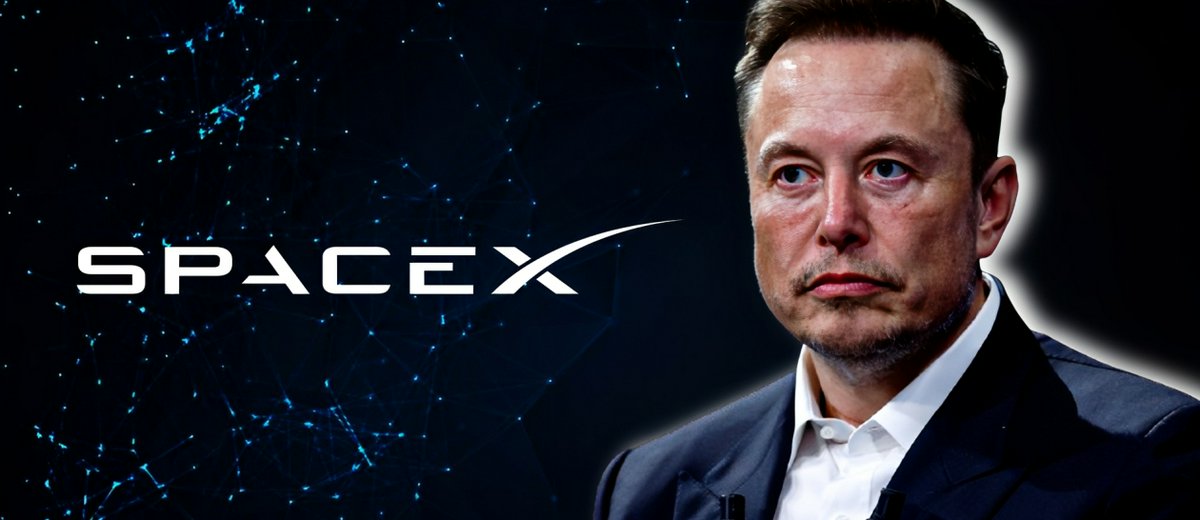
Elon Musk has pledged to give one SpaceX share to every child in the United States in 2027, framing the move as the first in a series of planned distributions. The announcement followed Anthropic’s disclosure that it will commit 5% of its shares to a new public benefit fund, and arrives as SpaceX reported holding roughly 80% of global orbital launch payload for 2026.
Key Takeaways
Elon Musk announced on X that he will give one SpaceX share to every child in the US in 2027, calling it "the first of many."
He provided no details on distribution mechanics, eligibility or how the pledge will be fulfilled.
SpaceX stock rose more than 2% to $149 on Monday after falling more than 10% the previous week.
Musk held about 4.8 billion SpaceX shares at the time of the company’s June 2026 public listing.
The pledge came after Anthropic said it would commit 5% of its shares to a public benefit fund, with possible further grants tied to valuation growth.
SpaceX carried roughly 80% of global orbital payload in 2026 according to industry tracker ooinsights.
The IMF has estimated that AI could affect around 40% of jobs globally, rising to 60% in advanced economies.
What Musk Said
Elon Musk announced the pledge on his social media platform X on Monday, October 19. His post read: "Next year, I will give one of my SpaceX shares to every kid in America. This will be the first of many."
The statement gives a clear headline commitment but leaves several practical questions unanswered. Musk did not explain how the shares would be identified, held or transferred to recipients, whether a custodial structure would be involved for minors, or what conditions, if any, would apply. No legal entity, timeline beyond "next year" or administrative mechanism has been announced.
How Many Children Does the Pledge Cover?
According to data from the US Census Bureau, there are approximately 73 million children in the United States. Each receiving one SpaceX share would require Musk to distribute 73 million shares from his personal holdings. At Monday’s price of $149 per share, 73 million shares would have a combined value of approximately $10.9 billion, though the actual cost to Musk would depend on the timing and structure of any distribution.
SpaceX Stock and Musk’s Holdings
SpaceX made its public market debut in June 2026. At the time of the listing, Musk held approximately 4.8 billion shares, a stake large enough to briefly push his estimated net worth above $1 trillion, according to reports at the time.
The stock fell more than 10% in the week before the announcement but recovered on Monday, rising more than 2% to reach $149. The timing of Musk’s pledge, made on a day when the stock was already moving higher, drew attention in financial media.
According to the Bloomberg Billionaires Index, Musk is currently the world’s wealthiest person, with an estimated net worth of approximately $904 billion across his various holdings, which include SpaceX, Tesla, xAI and X.
SpaceX’s Dominance in Global Orbital Launch
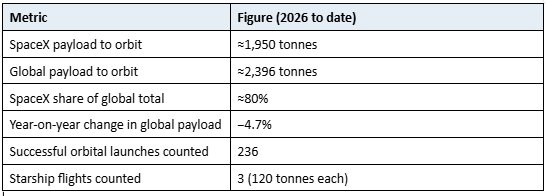
The announcement came as new data from space industry tracker ooinsights highlighted how dominant SpaceX has become in orbital launch activity. The tracker compiled figures for 2026 showing that SpaceX transported approximately 1,950 tonnes of payload into orbit, representing around four-fifths of the worldwide total.
Starship’s Role in the Lead
The tracker recorded three Starship flights during the period, each carrying approximately 120 tonnes of payload. The heavy-lift rocket’s capacity far exceeds that of any other operational launch vehicle and is a key driver of SpaceX’s outsized share of global orbital mass. Combined, the seven next-largest orbital launch providers lifted less than a quarter of what SpaceX delivered on its own.
Musk responded to a chart showing the data by describing SpaceX as "an anomaly in the matrix," borrowing a phrase from the 1999 film The Matrix, where an anomaly represents something the system is unable to explain or contain.
Why Anthropic’s Announcement Matters Here
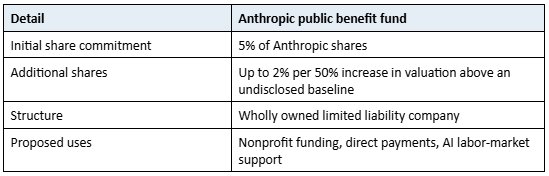
According to a report by Benzinga, Musk’s pledge came directly in response to an announcement by AI company Anthropic. On Monday, Anthropic posted on social media that it would commit 5% of its shares to a new public benefit fund, structured as a wholly owned limited liability company.
The Anthropic announcement also included a mechanism for additional share grants. The company said its board could award the fund an additional 2% of shares for every 50% increase in Anthropic’s valuation above a baseline that has not yet been disclosed.
What Anthropic’s Fund Is Designed to Do
Benzinga reported that the proposed fund could be used to finance nonprofit organizations, provide direct payments to certain populations, and support efforts to manage the effects of artificial intelligence on the labor market. The announcement comes as AI deployment accelerates across industries, with some companies citing automation when announcing workforce reductions.
Anthropic, which develops the Claude family of AI models, has positioned the fund as a response to the broader societal implications of the technology it builds. The fund’s structure leaves significant discretion with the Anthropic board over timing and amounts.
AI, Wealth and the Labor Market: The Wider Context
The back-and-forth between Musk and Anthropic touches on a debate that has grown louder as AI capabilities have expanded: who benefits from the wealth generated by artificial intelligence, and who bears the cost of its disruption.
Research published by the International Monetary Fund has estimated that AI could affect approximately 40% of jobs globally, with that figure rising to around 60% in advanced economies where knowledge work is a larger share of employment. The IMF research does not predict uniform job losses; it describes a mix of displacement, transformation and new job creation, but it flags the pace of change as a key policy concern.
Direct Distributions vs Institutional Funds
Musk’s pledge and Anthropic’s fund represent two different approaches to the question of redistribution. Musk’s announcement is framed as a direct transfer to individuals, a form of wealth distribution that bypasses institutional intermediaries. Anthropic’s model routes resources through a fund structure, giving the company’s board ongoing control over how the capital is deployed.
Neither approach is new in principle: direct cash transfers and philanthropic foundations have long histories. What is notable is that two of the most prominent names in AI and aerospace are both publicly responding to the same underlying pressure point within the same news cycle.
What We Do Not Yet Know
The SpaceX share pledge raises more questions than it answers at this stage. Among the details still missing: how Musk plans to identify and reach 73 million children, what legal or custodial framework would hold shares on behalf of minors, whether there are age or citizenship requirements, and how the mechanics would interact with securities regulations.
On the Anthropic side, the baseline valuation above which additional grants are triggered has not been disclosed, and the fund’s governance structure, investment mandate and distribution criteria remain to be detailed.
Both announcements were made through social media posts on the same day. Whether either results in a formal, legally binding structure within the stated timeframe remains to be seen.
Frequently Asked Questions
How many SpaceX shares would Musk need to give away?
At roughly 73 million children in the US according to Census Bureau data, Musk would need to distribute approximately 73 million shares. At Monday’s price of $149, that represents a notional value of around $10.9 billion.
When did SpaceX go public?
SpaceX debuted on the public markets in June 2026. At the time of listing, Musk held approximately 4.8 billion shares.
What is the Anthropic public benefit fund?
Anthropic announced it will place 5% of its shares into a new public benefit fund structured as a wholly owned LLC. Its board can also grant up to 2% of additional shares for every 50% rise in Anthropic’s valuation above an undisclosed baseline. The fund is intended to support nonprofits, direct payments and efforts to address AI’s effects on employment.
What share of global orbital launches does SpaceX account for?
According to data from ooinsights, SpaceX carried approximately 1,950 tonnes of payload into orbit in 2026, representing around 80% of the global total across 236 successful launches counted by the tracker.
What does the IMF say about AI and jobs?
IMF research estimates that AI could affect around 40% of jobs globally and up to 60% of jobs in advanced economies. The research describes a mix of disruption, transformation and new job creation, rather than uniform displacement.
Want to join the discussion? Login and create a profile to comment.