SpaceX Stock Surges After Q3 2026 Earnings Crush Wall Street — AI Division Overtakes Starlink
Key Takeaways
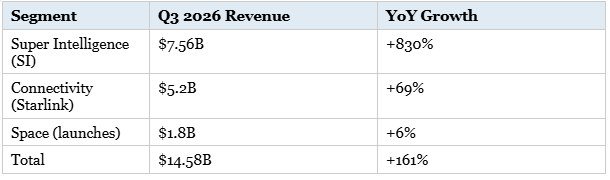
SpaceX reported $14.58 billion in Q3 2026 revenue, up 161% year over year, beating analyst consensus of $12.74 billion.
The Super Intelligence (SI) division generated $7.56 billion in revenue — up 830% year over year — and has now overtaken Starlink as the largest business segment.
SpaceX posted its first profitable quarter as a public company: net income of $4.4 billion versus a $1.1 billion loss in Q3 2025.
Adjusted EBITDA reached $8.81 billion, up 306% year over year, on capital expenditure of $19.59 billion.
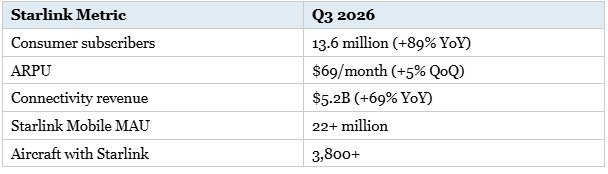
Starlink grew to 13.6 million consumer subscribers with connectivity revenue of $5.2 billion, up 69% year over year.
Elon Musk confirmed that SpaceX and Tesla have formed independent committees to explore a potential merger, though no terms have been agreed.
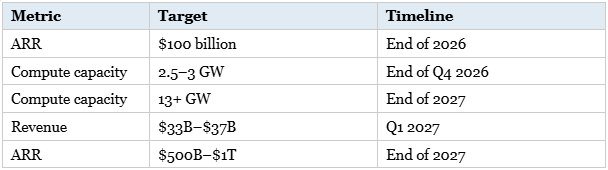
Management guided Q1 2027 revenue of $33–$37 billion and projects annual recurring revenue of $500 billion to $1 trillion by end of 2027.
Introduction: A Defining Quarter
SpaceX reported third-quarter 2026 results on October 20 that rewrote expectations for what an aerospace and artificial intelligence company can achieve in a single quarter. Revenue of $14.58 billion, up 161% year over year, obliterated the Wall Street consensus of $12.74 billion. Net income of $4.4 billion marked the company’s first profitable quarter since its June 2026 IPO on Nasdaq under the ticker SPCX. Shares climbed roughly 9% in after-hours trading from their regular-session close of $147.79 to approximately $161.37.
The headline numbers alone would have made this a landmark quarter. But the deeper story — the one that will shape how investors, technologists, and regulators think about SpaceX for years to come — is the structural transformation of the business itself. For the first time, an AI computing division has dethroned Starlink as the company’s primary revenue engine. The Super Intelligence (SI) segment, which encompasses AI computing infrastructure, cloud services, and Grok-related products, generated $7.56 billion in the quarter, growing 830% year over year. That is not a rounding error. It is the fastest segment growth rate recorded by any publicly traded company of comparable scale.
This article provides a comprehensive breakdown of SpaceX’s Q3 2026 results, examines the forces driving SI’s explosive growth, assesses the long-term trajectory of Starlink, and contextualizes the potential Tesla merger and the 2027 guidance that Elon Musk himself described as potentially the most ambitious projection in corporate history.
Section 1: Headline Financials — The Numbers That Moved Markets
Revenue and Profit
Total Q3 2026 revenue of $14.58 billion compares to $5.6 billion in Q3 2025, representing year-over-year growth of 161%. Against the Bloomberg consensus estimate of $12.74 billion, SpaceX beat by more than $1.8 billion — a 15% top-line upside surprise that is rare at any revenue scale, let alone for a company already generating tens of billions per quarter.
Net income came in at $4.4 billion, or $0.35 per diluted share, versus an analyst consensus of $0.12. A year earlier, the company reported a net loss of $1.1 billion. The swing from a $1.1 billion loss to a $4.4 billion profit in twelve months is driven almost entirely by the SI segment’s rapid maturation: the division swung from a $1.3 billion operating loss in Q2 2026 to a $431 million operating profit in Q3.
Adjusted EBITDA reached $8.81 billion, up 306% from $2.2 billion in Q3 2025, reflecting not just revenue growth but a significant improvement in operating leverage as the SI segment scaled past breakeven.
Capital Expenditure: Spending at Scale
SpaceX spent $19.59 billion on capital expenditures in Q3 2026 — up 185% year over year from roughly $6.9 billion in Q3 2025. Approximately $16.4 billion of that total, about 84%, went to the SI segment to fund the buildout of the Colossus II data center and associated compute infrastructure. The company ended Q3 with 1.7 gigawatts of nameplate compute capacity installed, up from 1.4 GW at the end of Q2.
Management guided Q4 2026 capital expenditure of $35 billion to $40 billion — roughly double the Q3 pace — as Colossus II construction accelerates and additional power and cooling infrastructure comes online. CFO Bret Johnsen stated that SpaceX expects compute capacity to reach 2.5 to 3 gigawatts by the end of Q4 2026.
Section 2: Super Intelligence — The $7.56 Billion AI Machine
How SI Became SpaceX’s Biggest Business
The Super Intelligence division formally replaced Starlink as SpaceX’s largest revenue segment in Q3 2026, a milestone that would have seemed implausible even twelve months ago. Segment revenue of $7.56 billion compares to roughly $830 million in the equivalent quarter of 2025, representing 830% year-over-year growth.
The division encompasses three interlocking products. First, AI compute infrastructure: hyperscale data centers that sell GPU and custom-chip capacity to enterprise and hyperscaler customers under long-term cloud services agreements. Second, Grok: the large language model developed by xAI, now integrated into the SpaceX platform, generating both direct consumer revenue and usage-based revenue from enterprise API customers. Third, Cursor: the AI coding assistant acquired on August 14, 2026, at an implied equity value of $60 billion, which contributed $608 million in revenue between its acquisition close and September 30.
The Cursor Acquisition: $60 Billion for a Coding Co-Pilot
The Cursor acquisition deserves particular attention. At $60 billion, it was one of the largest software acquisitions in history — larger than Microsoft’s acquisition of LinkedIn, and completed in a single quarter. Of the $60 billion implied equity value, $23 billion was attributed to employee retention and the replacement of equity compensation awards, reflecting the premium SpaceX was willing to pay to lock in Cursor’s engineering talent alongside its product.
Cursor contributed $608 million in revenue in the six weeks from acquisition close through September 30, implying an annualized revenue run rate of roughly $5 billion. Given that run rate and the growth trajectory of AI coding tools across enterprise software development, the acquisition could prove transformative for the SI segment’s long-term composition.
Compute Pricing and Payback Period
One of the most striking disclosures on the Q3 earnings call was the stated payback period for new compute deployments. CFO Bret Johnsen confirmed that "at current pricing, new compute deployments are generating a payback of less than a year." Musk went further, stating that "it’s not impossible that we will have a six-month payback period for compute next year."
Current pricing for SI compute capacity is "slightly above the high end of the $30 to $50 per watt" range cited on previous calls. Musk expressed conviction that pricing will rise over time: "Our belief is that the value of compute per watt will increase over time, not decrease." He also articulated a demand-side rationale: "I think we’re going to face a shortage of super intelligence compute" — a view consistent with the accelerating long-term agreements being signed by hyperscaler customers.
2027 Compute Expansion: 13 to 20 Gigawatts
Musk outlined compute expansion targets for 2027 that are unprecedented in the history of data center buildout. He stated that he would "be surprised if we brought on less than 13 gigawatts of compute by the end of next year," and described 20 gigawatts as a "non-zero possibility." For context, the entire US hyperscaler industry — Amazon, Microsoft, Google, and Meta combined — added an estimated 8 to 10 gigawatts of total new capacity across all of 2024. SpaceX is targeting that figure for its own incremental build in 2027 alone.
If executed, those capacity targets would underpin the even more extraordinary 2027 revenue guidance Musk provided: an annual recurring revenue (ARR) run rate of $500 billion to $1 trillion by the end of 2027. CFO Johnsen noted the company remains "on track" toward a more conservative $100 billion ARR by the end of 2026.
Section 3: Starlink — Dethroned but Still Growing Fast
Revenue and Subscriber Growth
Despite being overtaken by SI in revenue terms, Starlink posted its best revenue quarter to date. Connectivity segment revenue of $5.2 billion was up 69% year over year and 22% sequentially from Q2’s $4.29 billion. Consumer subscriber count grew to 13.6 million, up 1.6 million from 12 million at the end of Q2 and up 89% from the year-earlier period.
Average revenue per user (ARPU) rose 5% quarter over quarter to $69 per month. Enterprise and government revenue within the Connectivity segment grew 91% year over year, outpacing consumer growth as defense, maritime, and aviation customers expanded usage. The article from teslanorth.com notes that more than 3,800 aircraft now have Starlink installed.
Starlink Mobile — the direct-to-device cellular service that bypasses traditional telecom infrastructure — surpassed 22 million monthly active users. SpaceX agreed on October 8 to acquire 800 MHz of spectrum licenses to accelerate Starlink Mobile’s buildout, a deal expected to close in the first half of 2027.
Starship: First Revenue Mission
The Space segment generated $1.8 billion in revenue in Q3 2026, up 84% from Q2. A significant milestone occurred during the quarter: Starship Flight 14, which successfully deployed 26 Starlink V3 satellites, became the rocket program’s first revenue-generating mission. The flight marked a transition from development to commercial operations for the world’s most powerful launch vehicle, though Musk cautioned that "success is not guaranteed on these first flights" as the program continues to mature.
SpaceX conducted 12 customer launches and 23 internal launches during Q3, with 113 launches year to date. Customer launch revenue is included in the Space segment, while internal launches (primarily Starlink satellite deployments) are treated as capex, reducing the segment’s revenue relative to gross launch activity.
Section 4: The Tesla Merger — What Musk Actually Said
Independent Committees Formed; No Agreement Reached
The most market-moving disclosure outside the headline financials was Musk’s confirmation that both SpaceX and Tesla have formed special committees of independent directors to explore a potential merger. Musk was careful to frame the disclosure in measured terms: "the special committees have not reached agreement on the terms of any transaction," and added "there’s no guarantee that they will."
He also outlined the governance hurdle that any deal would face: a Tesla-SpaceX merger would require "a 50% vote of all shares, not just those who vote." That threshold — majority of all outstanding shares, rather than majority of votes cast — is exceptionally high and could be difficult to achieve given institutional investor skepticism about related-party transactions involving Musk-controlled entities.
Strategic Rationale: Why a Merger Is Being Explored
The strategic logic of a SpaceX-Tesla combination has been discussed since at least early 2026, when Bloomberg and Semafor first reported that SpaceX was considering merger scenarios with either Tesla or xAI. The convergence thesis rests on several product-level overlaps: Tesla’s Dojo supercomputer and autonomous driving AI stack alongside SpaceX’s SI compute infrastructure; Tesla’s Optimus humanoid robot alongside SpaceX’s need for physical automation in launch facilities; and the shared energy infrastructure that both companies are building.
A combined entity would also simplify the complexity of Musk’s portfolio for institutional investors who currently must hold separate positions in a public Tesla and a newly public SpaceX to gain exposure to both. However, critics note that SpaceX’s higher valuation and faster growth trajectory could dilute Tesla shareholders unless the exchange ratio strongly favors Tesla equity.
What Crypto and Technology Investors Should Watch
For investors who follow digital assets and emerging technology, the Tesla-SpaceX merger dynamic is relevant for several reasons. SpaceX’s SI compute infrastructure — particularly the Colossus II data center and its successor facilities — is increasingly central to the AI agent economy that is also driving demand for stablecoin rails and on-chain payment infrastructure. The companies and AI agents that will process the largest volumes of machine-speed payments are the same customers consuming SpaceX compute at scale.
Additionally, Tesla’s balance sheet holds significant Bitcoin, making any combined entity a major institutional holder of cryptocurrency. A merger that created a single public vehicle combining SpaceX’s compute growth, Tesla’s energy and robotics assets, and a crypto treasury would represent an unprecedented intersection of physical infrastructure, AI, and digital assets.
Section 5: Guidance and the $500 Billion ARR Projection
Q4 2026 and Q1 2027 Targets
SpaceX management provided unusually specific forward guidance, a departure from the company’s pre-IPO practice of offering no formal outlook. CFO Bret Johnsen guided Q4 2026 capital expenditure of $35 billion to $40 billion — up from $19.59 billion in Q3 — reflecting the accelerating Colossus II buildout and new site developments including Starbase Louisiana, where Musk said SpaceX plans "on the order of 20 or more launch towers."
For Q1 2027, management guided total company revenue of $33 billion to $37 billion. If achieved at the midpoint, that would represent a further doubling of the Q3 2026 revenue run rate in a single quarter, driven predominantly by SI segment growth as new compute capacity comes online and long-term cloud services agreements begin recognizing revenue.
The $500 Billion to $1 Trillion ARR Vision
Musk’s 2027 ARR projection of $500 billion to $1 trillion warrants both attention and scrutiny. The base case, $100 billion ARR by end of 2026, is consistent with the Q3 exit run rate of approximately $58 billion annualized ($14.58B × 4) and the stated Q1 2027 revenue midpoint of $35 billion, which implies roughly $140 billion annualized. The $100 billion target by year-end therefore requires Q4 revenue of at least $25 billion, which is plausible given Q4 capex guidance and compute capacity expansion.
The 2027 targets — $500 billion to $1 trillion in ARR — require a further 5 to 10 times expansion on top of an already ambitious 2026 trajectory. The bull case depends on SI compute pricing remaining elevated or rising (consistent with Musk’s stated belief), successful deployment of 13 to 20 GW of incremental compute, continued enterprise and government adoption of Grok and Cursor, and no significant disruption from competing hyperscaler offerings.
The risk factors are equally significant: power availability constraints (analysts pressed management on this point repeatedly during the call), potential regulatory scrutiny of a company that is simultaneously a launch provider, a satellite operator, and an AI hyperscaler, and the execution risk inherent in building out data center capacity at a pace that has no historical precedent.
Section 6: What This Means for the Broader Tech and Crypto Ecosystem
SpaceX as the New AI Hyperscaler
Prior to SpaceX’s June 2026 IPO, the global AI compute market was effectively a three-player oligopoly — Microsoft Azure, Google Cloud, and Amazon Web Services — with NVIDIA occupying the critical GPU supply chokepoint. SpaceX’s emergence as a fourth major compute provider, with the added differentiation of proprietary chips, integrated connectivity via Starlink, and a vertically integrated energy-to-compute stack, introduces meaningful competition into a market that had been consolidating.
For AI startups and enterprise AI teams evaluating compute vendors, SpaceX offers a differentiated proposition: compute priced "slightly above $50 per watt" with sub-year payback periods for the underlying infrastructure, delivered through long-term agreements that provide pricing certainty. The Anthropic deal — $1.25 billion per month through May 2029 for access to Colossus I — remains the highest-profile example of the customer profile SpaceX is targeting.
Implications for Crypto and Digital Assets
The intersection of SpaceX’s growth with the digital asset ecosystem is more direct than it might appear. The same AI agents that are beginning to transact using stablecoin rails on Base, Solana, and Ethereum are predominantly running on hyperscale compute infrastructure — and increasingly on SpaceX’s SI platform. As AI agent commerce scales toward the McKinsey projection of $3 to $5 trillion in B2C transactions by 2030, the compute infrastructure provider and the payment rail provider are becoming interdependent layers of the same economy.
Starlink’s global connectivity footprint adds another dimension. In markets where blockchain and stablecoin adoption is growing fastest — sub-Saharan Africa, Southeast Asia, and parts of Latin America — Starlink is often the most reliable and affordable internet connection available. The same satellite that delivers a Starlink broadband connection in rural Nigeria is enabling a user to hold, send, and receive USDC on a mobile wallet. Infrastructure and financial access are converging.
Frequently Asked Questions
What were SpaceX’s Q3 2026 revenue figures?
SpaceX reported Q3 2026 total revenue of $14.58 billion, up 161% year over year. The breakdown was $7.56 billion from the Super Intelligence division (up 830% YoY), $5.2 billion from Connectivity/Starlink (up 69% YoY), and $1.8 billion from the Space segment (up 6% YoY).
What is SpaceX’s Super Intelligence (SI) division?
The Super Intelligence division is SpaceX’s AI and compute business. It includes AI computing infrastructure sold as cloud services to enterprise and hyperscaler customers, the Grok large language model, and Cursor (the AI coding assistant acquired in August 2026 for an implied equity value of $60 billion). SI generated $7.56 billion in Q3 2026, overtaking Starlink as the largest segment.
What is the payback period on SpaceX’s AI compute investments?
CFO Bret Johnsen stated on the Q3 call that "at current pricing, new compute deployments are generating a payback of less than a year." Musk added that a six-month payback period is "not impossible" by next year. Current pricing is described as slightly above the $50 per watt mark.
How many Starlink subscribers does SpaceX have?
SpaceX ended Q3 2026 with 13.6 million Starlink consumer subscribers, up from 12 million at the end of Q2. Starlink Mobile surpassed 22 million monthly active users. Average revenue per consumer subscriber was $69 per month.
Is SpaceX merging with Tesla?
As of the Q3 2026 earnings call, both SpaceX and Tesla have formed special committees of independent directors to explore a potential merger. Elon Musk confirmed that no terms have been agreed upon and that a deal would require a vote of 50% of all outstanding Tesla shares to pass. There is no guarantee a transaction will occur.
What revenue did SpaceX guide for Q1 2027?
SpaceX guided Q1 2027 total revenue of $33 billion to $37 billion. This compares to $14.58 billion in Q3 2026. The guidance implies roughly a 125–155% sequential quarterly increase, driven primarily by the SI segment as new compute capacity comes online. Musk also projected ARR of $500 billion to $1 trillion by the end of 2027.
What is SpaceX’s capital expenditure outlook?
SpaceX guided Q4 2026 capex of $35 billion to $40 billion, up from $19.59 billion in Q3. The majority of capex is directed to the SI segment for AI compute infrastructure buildout. Musk targets 13 gigawatts of incremental compute capacity by end of 2027, with 20 gigawatts described as a "non-zero possibility."
Conclusion: A Company Redefining Itself in Real Time
SpaceX entered its June 2026 IPO as a rocket company with an impressive satellite internet business attached. Six months later, it has reported its first profitable quarter as a public company — driven not by Falcon 9 launches or Starlink subscriptions, but by an AI compute division that grew 830% in a year and is now forecasting revenue that would make it, by itself, one of the largest companies in the world within twenty-four months.
That transformation is not without risk. The $35 to $40 billion in Q4 capex guidance is extraordinary even by hyperscaler standards, and the 2027 ARR projections operate at a scale that has no comparable historical reference point. The Tesla merger adds governance complexity. Power constraints remain an open question. And the regulatory environment for a company that simultaneously operates the world’s most powerful rocket, the largest satellite constellation, and a fast-growing AI platform is inherently unpredictable.
But the Q3 results represent hard data, not projections. $14.58 billion in revenue. $4.4 billion in net income. An AI division that went from a $1.3 billion operating loss to a $431 million operating profit in a single quarter. A satellite network with 13.6 million paying subscribers and a first revenue-generating Starship mission under its belt. For investors tracking the intersection of aerospace, artificial intelligence, and global connectivity, the Q3 2026 earnings report from SpaceX is a document worth reading in full.
Want to join the discussion? Login and create a profile to comment.