Zcash's $550,000 Adult Industry Outreach Grant Ignites Community Debate Over Privacy Coin Strategy
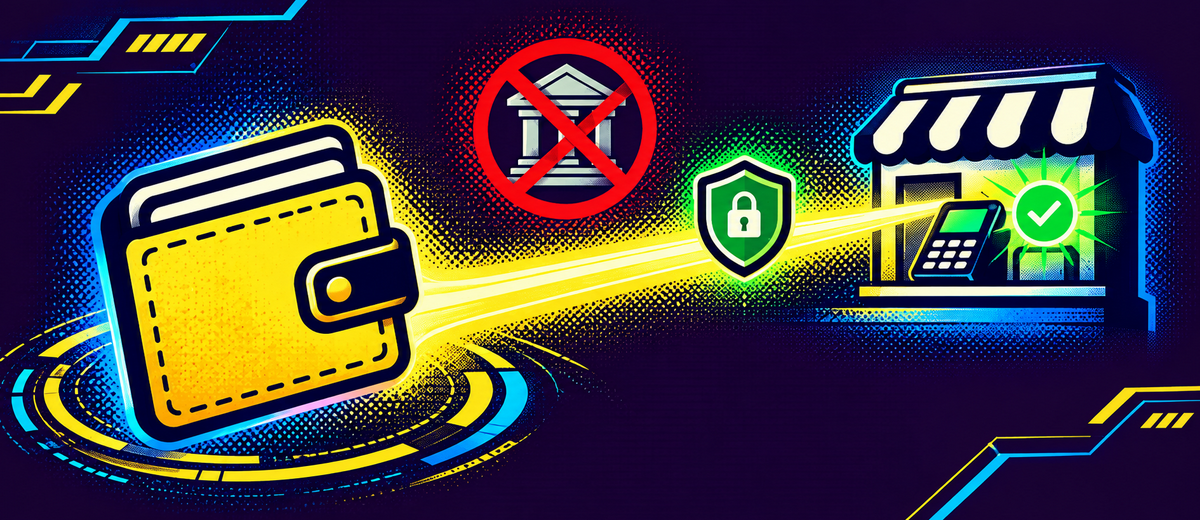
A $550,000 Zcash Community Grant targeting outreach to adult industry workers and merchants has become the focal point of a sharp debate about how privacy-focused cryptocurrency projects should pursue adoption. Approved on August 31, 2026, the grant funds ZECsy — a program led by Mylo Bennett that is teaching workers facing banking discrimination how to use Zcash's shielded transactions, self-custody wallets, and merchant point-of-sale tools. On October 26, a trader publicly announced an increased short position in ZEC after photographs from an adult entertainment convention circulated online. Defenders of the program counter that reaching financially excluded communities is precisely what privacy technology was built to do — and that the community forum response has been broadly supportive.
Key Takeaways
Zcash Community Grants approved a revised $550,000 proposal on August 31, 2026, with approximately $461,500 in authorised funding covering the first nine of twelve planned monthly milestones
Program leader Mylo Bennett originally requested $588,000 for a 12-month initiative; the budget was reduced and the focus shifted further toward adult industry outreach following pre-approval discussions with the grants committee
The revised schedule includes five adult industry events, four cryptocurrency conferences, and eight workshops — a more industry-weighted breakdown than the original application
ZECsy demonstrated Zcash payments at the Exxxotica convention in New Jersey under the booth name "Mama's Zcash Kitchen"; photographs from the event prompted a trader called TraderSZ to increase their ZEC short position
ZECsy's September progress report recorded 20 adult service providers publicly listing ZEC as a payment option and two small businesses beginning to accept it
A separately funded Amsterdam appearance logged approximately 200 event check-ins; Working Girls Press processed ZEC payments through CipherPay at the event
Zcash founder Zooko Wilcox pushed back in May on Arkham Intelligence's report that its analytics platform had linked over 53% of Zcash transactions to identifiable entities, stating that fully shielded pool transactions remain inaccessible to blockchain analytics
Background: What Zcash Is and Why Financial Privacy Matters for the Adult Industry
Zcash (ZEC) is a cryptocurrency launched in 2016 that was specifically engineered to offer strong transaction privacy through a cryptographic mechanism called zero-knowledge proofs. Unlike Bitcoin and most other public blockchains — where every transaction is permanently visible on a public ledger that anyone can analyse — Zcash allows users to choose between two transaction types: transparent transactions (similar to Bitcoin's public model) and shielded transactions, which conceal the sender, recipient, and transaction amount from outside observers while still being cryptographically verifiable by the network.
The shielded pool is Zcash's distinguishing feature. When a user sends ZEC from one shielded address (z-address) to another, the only information publicly visible is that a shielded transaction occurred — not who sent it, who received it, or how much was transferred. This is fundamentally different from privacy-by-default cryptocurrencies like Monero, and from the optional privacy add-ons attempted by mixing services on Bitcoin, because the zero-knowledge proof mechanism provides cryptographic privacy guarantees rather than probabilistic ones.
This privacy architecture has obvious relevance to the adult industry, where workers and businesses face a distinctive and well-documented set of financial access problems that mainstream cryptocurrency adoption efforts rarely address.
Adult industry workers and businesses are subject to what critics describe as systematic banking discrimination — a pattern in which financial institutions close accounts, reject applications, or refuse payment processing services to individuals and businesses associated with adult content, escort services, and related industries. This discrimination is not uniformly illegal, and it has resulted in large numbers of adult industry workers being effectively excluded from conventional banking services: unable to maintain business bank accounts, unable to use standard payment processors, and forced to operate in cash-only environments that create safety and logistical challenges.
Financial privacy compounds the access problem. In a cash transaction, no financial record is created. In a conventional digital payment, the transaction creates a permanent record linking the customer and provider — a record that many adult industry workers consider a significant safety risk given the stigma their profession continues to carry and the potential for that information to be exposed, weaponised, or accessed by abusive individuals. Privacy-preserving cryptocurrency payments offer a potential middle path: digital transactions with the convenience and security of electronic payment, without the permanent public financial record that conventional digital payments create.
Grant Structure: How the $550,000 Is Approved and Disbursed
The ZECsy grant illustrates how Zcash Community Grants — the program through which community members can apply for funding from the Zcash development fund — operates in practice, including the back-and-forth between applicants and the grants committee that often shapes final proposals.
Mylo Bennett submitted the initial application on August 3, 2026, requesting $588,000 for a twelve-month program running from September 2026 through August 2027. The original version weighted the event schedule toward cryptocurrency and technology conferences: eight events in the crypto/technology sector, four adult industry conventions, and eight weekend workshops. The budget reflected a relatively conservative balance between building Zcash's presence in its existing technical community and pursuing the new adult industry outreach mandate.
Following discussions with the Zcash Community Grants committee, Bennett revised the application on August 26 — cutting the overall budget and restructuring the event allocation. The revised schedule swapped the balance: five adult industry events, four cryptocurrency conferences, and eight workshops. The revision shifted the program's centre of gravity more explicitly toward the communities the grant was designed to serve, trading some presence at mainstream crypto venues for deeper engagement with adult industry events and participants.
The committee approved the revised proposal on August 31, 2026. However, rather than authorising the full program from the outset, the approval was structured to cover only the first nine monthly milestones — a staged authorisation that maintains committee oversight over a longer program timeline. Total approved funding amounts to approximately $461,500 against the revised overall budget, with the initial disbursement of $45,833 issued on September 1.
The funding scope covers staff compensation, travel, accommodation, event sponsorship fees, educational materials production, and the payment demonstrations conducted at outreach events. Bennett is required to submit monthly progress reports covering expenditure, workshop attendance, wallet installations, and completed events — a reporting cadence that gives the committee visibility into program outcomes before subsequent milestone payments are released.
What ZECsy Is Actually Doing on the Ground
ZECsy's outreach methodology combines financial privacy education with practical merchant and payment adoption tools, deployed at venues where adult industry participants are already present rather than expecting them to come to cryptocurrency conferences.
Exxxotica New Jersey: "Mama's Zcash Kitchen"
The most visible and controversial deployment described in the program's materials was ZECsy's attendance at Exxxotica — a major adult entertainment convention held in New Jersey. The team operated a dedicated booth under the name "Mama's Zcash Kitchen," offering payment demonstrations and educational materials to convention attendees.
Bennett's photographs from the Exxxotica booth, shared publicly, were the immediate trigger for the trader backlash described later in this article. The images showed the ZECsy team in the convention environment alongside adult industry exhibitors and attendees — a visual that critics characterised as reputationally problematic for a cryptocurrency seeking institutional legitimacy, while supporters argued it was precisely the kind of presence necessary to reach the target audience in their natural environment.
The team combined what Bennett's application describes as "financial privacy education with physical safety supplies" — a dual focus that reflects the specific vulnerability profile of adult industry workers, for whom personal safety and financial privacy are interrelated concerns. For workers whose professional identity could expose them to harassment or physical danger if linked to a financial transaction, the value of untraceable payments extends beyond financial efficiency.
Workshop Curriculum: Self-Custody, Shielded Transactions, and CipherPay
Beyond convention appearances, ZECsy's workshop program teaches participants foundational skills in privacy-preserving cryptocurrency use. The curriculum covers three core areas:
Self-custody wallet setup: Workshops guide participants through installing and configuring non-custodial Zcash wallets — software that gives users direct control over their private keys rather than relying on an exchange or third-party custodian. Self-custody is particularly important for the adult industry audience because custodial platforms have frequently deactivated accounts belonging to adult industry workers as part of the same pattern of financial discrimination that affects their banking access.
Shielded Zcash transactions: Participants learn to send and receive ZEC using shielded addresses — using Zcash's zero-knowledge proof system to conduct transactions that reveal no information about sender, recipient, or amount to outside observers. Workshops emphasise the difference between transparent and shielded transactions and the practical steps required to ensure a payment actually uses the shielded pool.
CipherPay point-of-sale system: CipherPay is a merchant-facing payment tool designed to allow businesses to accept ZEC payments without requiring technical expertise. ZECsy demonstrates the system to merchants and service providers who want to offer Zcash as a payment option, handling the practical setup rather than leaving participants to navigate the technical requirements independently.
The team's decision not to monitor participants' transaction histories after onboarding — even for program reporting purposes — reflects a deliberate alignment of ZECsy's practices with the privacy principles it teaches. Tracking which participants sent or received payments, even for grant compliance purposes, would undermine the trustworthiness of a program whose entire value proposition rests on not creating financial surveillance records.
September Results: 20 Providers, 200 Amsterdam Check-Ins
ZECsy's September 2026 progress report — submitted as part of the grant's monthly milestone reporting requirements — recorded measurable adoption outcomes alongside expenditure data.
On the merchant adoption side, 20 adult service providers publicly listed ZEC as an accepted payment option during September, and two small businesses began accepting ZEC in practice rather than just listing it as available. These numbers are modest, but they represent genuine on-the-ground progress: converting individual outreach conversations at conventions and workshops into actual business adoption requires sustained follow-up and practical support that most cryptocurrency adoption efforts do not provide.
An Amsterdam appearance — funded separately from the main ZECsy grant — logged approximately 200 event check-ins and established relationships with organisations interested in hosting future privacy workshops. Working Girls Press, an organisation that produces content for and by sex workers, processed ZEC payments through the CipherPay point-of-sale system during the Amsterdam event — one of the clearest demonstrations of the technology functioning in its intended real-world context.
Out of the initial $45,833 grant payment, ZECsy recorded $30,883 in expenditure as of the September report — covering staff compensation and advance arrangements for future events. The remaining balance was retained for upcoming program activities.
The Trader Backlash: Short Sellers and Reputational Concerns
The controversy over ZECsy's adult industry outreach crystallised publicly on October 26, when a trader using the name TraderSZ posted on X that the Exxxotica photographs had prompted an increase in their ZEC short position. The implication was that the association between Zcash and adult industry outreach constituted a negative signal for ZEC's price — either by reducing institutional investor appetite for the asset or by attracting regulatory scrutiny of a privacy coin with visible connections to a frequently regulated industry.
A separate account, identified in coverage as "bet more," criticised the outreach program's approach and endorsed another user's decision to sell their Zcash holdings.
The trading community objections reflect a real tension in how privacy cryptocurrency projects balance different audience priorities. Institutional investors and mainstream exchanges are acutely sensitive to regulatory signals; a privacy coin's association with controversial industries can become a compliance barrier for regulated entities that might otherwise consider listing or holding the asset. Traders who hold ZEC as a speculative investment are exposed to any negative price impact that reputational concerns create, regardless of whether they personally agree with the criticism.
Community Forum Response: Broader Support for the Program
The reaction within Zcash's own community forums was more favourable than the trader response suggested. Developers and long-standing community contributors characterised the program as a practical and philosophically consistent application of Zcash's core value proposition.
Contributor emersonian argued that the budget was reasonable relative to what cryptocurrency projects typically spend on sponsorships and marketing, framing ZECsy's event costs within the context of the broader industry's promotional spending habits. The implicit argument was that a $550,000 budget for twelve months of direct community outreach, event sponsorship, and technical education compares favourably to equivalent sums spent on logo placements at generic technology conferences.
Other community members highlighted the gap that ZECsy is attempting to fill: privacy-focused cryptocurrency has often been discussed in abstract technical terms or in the context of political and civil liberties arguments, with relatively little direct outreach to the communities for whom the practical stakes of financial privacy are highest. Adult industry workers, unbanked individuals, and people facing payment discrimination are users for whom Zcash's shielded transaction functionality addresses concrete real-world problems — and who are unlikely to encounter cryptocurrency through conventional marketing or media channels.
The Broader Privacy Debate: Arkham's Analytics Report and Zooko's Response
The ZECsy controversy sits alongside a separate but closely related debate about the actual strength of Zcash's privacy protections in practice.
In May 2026, blockchain analytics firm Arkham Intelligence — a platform that specialises in mapping cryptocurrency transactions to identifiable entities — reported that its analytics system had succeeded in linking more than 53% of Zcash transactions to entities that could be identified. The figure attracted significant attention because it appeared to challenge Zcash's reputation as a privacy coin, suggesting that a majority of transactions were not private in any meaningful sense.
Zcash founder Zooko Wilcox disputed the characterisation directly, and the distinction he drew is crucial for understanding both the Arkham report and Zcash's privacy model.
Zcash has always operated with two types of transactions: transparent transactions (analogous to standard Bitcoin transactions, fully visible on the public blockchain) and shielded transactions (protected by zero-knowledge proofs and inaccessible to outside analysis). The network has historically seen a significant proportion of transactions conducted as transparent rather than shielded — an artefact of early wallet compatibility issues, exchange withdrawal processes, and user behaviour rather than any flaw in the underlying cryptography.
Arkham's 53% figure almost certainly reflects the analytical accessibility of these transparent transactions rather than any breakthrough in de-anonymising the shielded pool. Wilcox's response made this point explicitly: activity inside the shielded pool — transactions conducted between z-addresses using Zcash's zero-knowledge proof system — remained inaccessible to Arkham's platform. The 53% linkage rate reflects transactions that were always publicly visible, not a compromise of the cryptography protecting shielded transactions.
This distinction matters for the ZECsy program specifically because the workshops explicitly teach participants to use shielded transactions rather than transparent ones. A participant who follows the workshop curriculum and sends ZEC between shielded addresses benefits from the privacy guarantees Wilcox described — not from the transparent transaction model that Arkham's report addressed.
Whether most real-world Zcash users actually use shielded transactions consistently is a separate question, and one that ZECsy's focus on workshop education and hands-on demonstration is specifically designed to improve. Teaching adult industry workers to install wallets, configure shielded addresses, and verify that transactions are using the protected pool closes the gap between Zcash's theoretical privacy guarantees and the practical privacy that users actually achieve.
What the Debate Reveals About Privacy Coin Strategy
The controversy over ZECsy's grant reflects a genuine strategic dilemma that privacy cryptocurrency projects face in navigating between their technical mission and their commercial viability.
On one side sits the argument from first principles: privacy-preserving financial tools exist to protect individuals from financial surveillance, discrimination, and coercion. The communities with the most immediate and concrete need for such protections are often those that mainstream institutions exclude — unbanked workers, populations in countries with oppressive financial regimes, and individuals in stigmatised professions who face account closures and payment discrimination. Reaching these communities requires going to where they are, which includes adult industry conventions, and accepting the reputational associations that entails.
On the other side sits the commercial and regulatory reality that privacy coins face in an environment of increasing scrutiny. Several major exchanges have delisted Zcash and similar privacy-focused assets in response to regulatory pressure or internal compliance decisions. Institutional investors subject to enhanced due diligence requirements for assets with privacy features are sensitive to signals about how a coin is positioned and used. A privacy coin that becomes publicly associated primarily with controversial industries may find the path to institutional adoption more difficult, regardless of the technical merit of its privacy architecture.
Neither position is entirely wrong. The strategic question of how to sequence these priorities — whether to prioritise serving underserved communities now at some cost to institutional respectability, or to build institutional credibility first and extend outreach later — has no obvious answer, and the division in the Zcash community over ZECsy reflects genuine disagreement rather than bad faith on either side.
Reporting Requirements and Program Accountability
Zcash Community Grants requires ZECsy to submit monthly updates covering four specific areas: expenditure against budget, workshop attendance figures, wallet installations completed, and events attended or hosted. This reporting framework serves both accountability and learning functions — giving the grants committee the data it needs to assess whether program milestones are being met, while also generating a record of what kinds of outreach activities produce measurable adoption outcomes.
The staged authorisation structure — covering nine of twelve monthly milestones rather than the full program — gives the committee a decision point at the nine-month mark to assess results before releasing any additional funding. This design provides a check against a program that might consume its full budget without demonstrating sufficient impact, while giving Bennett enough runway to build relationships and generate adoption numbers that take time to accumulate.
The monthly reporting cadence also creates accountability around the specific metrics that matter for evaluating whether ZECsy's approach is working: wallet installations are a concrete measure of whether workshop attendees actually complete the onboarding process, while public merchant listings provide evidence that the outreach is converting to real-world adoption rather than simply generating convention appearances.
Summary
Zcash Community Grants' $550,000 approval for ZECsy — a program teaching adult industry workers and merchants to use Zcash's shielded transactions and merchant payment tools — has produced a community division that reflects genuine strategic tensions within the privacy cryptocurrency space. The program's outreach at venues including the Exxxotica convention in New Jersey, while drawing criticism from traders who view the association as reputationally damaging to ZEC, is grounded in a coherent argument: workers facing systematic banking discrimination are among the most concrete beneficiaries of financial privacy technology, and reaching them requires direct presence in their professional community. ZECsy's September results — 20 merchants listing ZEC, 200 Amsterdam event check-ins, and Working Girls Press processing live payments through CipherPay — represent early but real adoption evidence. The broader debate about whether Zcash's privacy protections are robust in practice was reignited by Arkham Intelligence's May report, with Zcash founder Zooko Wilcox clarifying that the 53% identifiability figure reflects transparent transactions rather than the shielded pool that ZECsy's workshops specifically teach participants to use. Whether the privacy coin community concludes that ZECsy represents principled adoption strategy or reputational risk will likely depend on whether the program's measurable outcomes — wallet installations, merchant adoption, and community reach — prove sufficient to make the case by the nine-month milestone review.
Want to join the discussion? Login and create a profile to comment.